
Last updated October 17, 2026
 Metal roofing
 Architectural shingles
 Tile roofing
 GAF
GAF Owens Corning
 Flat & low-slope
Free roof inspection with deck photos before we talk money - GAF and Owens Corning certified installation
Roofing Warning Signs: A Fort Worth Homeowner’s Reference Guide
Here’s what catches most Fort Worth homeowners off guard: the first sign of a failing roof rarely shows up on the roof itself. It shows up in the attic, on the ceiling, or in a utility bill that creeps up ten percent over a summer. By the time a shingle curls at the eave, the water that actually damages a home has usually been working its way through the decking for weeks. This guide walks through the warning signs that matter, in the order that catches problems before they become replacements, and for a deeper dive into protecting your home, see our Complete Guide to Roofing in Fort Worth. Fort Worth’s specific combination of hail, wind, and hard sun means our roofs fail in patterns a trained eye can read.
Quick Answer
Roofing warning signs in Fort Worth fall into three main groups: interior water damage (attic staining, ceiling spots, insulation compression), exterior shingle failure (hail bruising, wind creasing, granule loss from UV exposure), and flashing breakdown around chimneys, skylights, and wall tie-ins. The most important diagnostic step is reading the attic first, because interior evidence shows up weeks before shingle damage is visible from the ground. If you see water staining on rafters or compressed insulation, schedule a professional inspection before the problem spreads to the decking.
Styles & brands we work with
Table of Contents
- The Inside-Out Inspection: Why Your Attic Is the First Place to Look
- Hail vs. Wind vs. UV Wear: Three Failure Modes That Look Alike From the Ground
- Flashing Failure at Chimneys, Skylights, and Wall Tie-Ins: The Most Underdiagnosed Leak Source in Fort Worth
- Signs a Previous Repair Was Done Incorrectly
- Severity Triage: Watch It, Repair Within 90 Days, or Call Today
- What Roof Repairs Actually Cost in Fort Worth
- Hail Claims and Insurance: What Fort Worth Homeowners Need Before Filing
- Prevention: The Maintenance Routine That Adds Years to a Fort Worth Roof
The Inside-Out Inspection: Why Your Attic Is the First Place to Look
The most common mistake in roof inspection is starting on the roof surface. By the time shingle damage is visible from the ground, water has usually already reached the structural layer. The attic tells the truth, and it tells it early.
Water follows a predictable path through a roof assembly. It enters at the breach point (a cracked shingle, a failed seal, a rusted flashing), pools briefly on the underlayment, then seeps into the decking. Once the decking is saturated, it moves along rafters, follows gravity to the eaves, and eventually shows up as a ceiling stain. That timeline can take weeks. A stain on a bedroom ceiling is not the beginning of a leak. It’s the end of one.
Here’s the inside-out sequence we use when evaluating a Fort Worth roof:
- Rafters first. Look for dark streaks, water stains, or white chalky mineral deposits. These patterns tell you water has been entering, not just that moisture exists.
- Decking second. Check for soft spots, warping, or discoloration between rafters. Press gently with a wooden dowel rod if you’re comfortable doing so. Saturated decking feels spongy.
- Insulation third. Compressed or matted fiberglass insulation is a direct signal of a past leak. Water weighs down insulation, breaking its loft. Even if the leak was repaired, compressed insulation means water was present long enough to saturate it.
- Ventilation last. In summer, a Fort Worth attic can reach 150 degrees or higher without proper airflow. Check for working ridge vents, soffit vents, and no blocked openings. Poor ventilation doesn’t just shorten shingle life; it creates condensation that mimics leak damage.
We’ve inspected attics in Fort Worth where homeowners swore the roof was fine because no shingles were missing. The rafters told a different story. A roof can be failing structurally while looking acceptable from the curb. That’s the core reason interior-first inspection matters.
If you’re not comfortable climbing into your attic, call us at Crestview Roofing Co Fort Worth home at (682) 730-3548 and we’ll document exactly what we see with photos you’ll receive before any quote. The Relay Visibility Guarantee means every observation is put in writing and backed by photo evidence.
Hail vs. Wind vs. UV Wear: Three Failure Modes That Look Alike From the Ground
Fort Worth roofs face three distinct enemies: hail, wind, and ultraviolet radiation. Each leaves a different signature, and each requires a different repair approach. From the street, all three can look like “the roof looks old.” Up close, the damage is specific and identifiable.
Hail Damage: Bruising and Granule Knockout
Hail damage on asphalt shingles shows up as small, circular impacts where granules have been knocked away. The underlying asphalt mat is exposed, often with a visible “bruise” or indentation. After a Fort Worth hailstorm, you’ll see these impacts concentrated on south-facing and west-facing slopes, since hail usually rides incoming storm fronts from those directions. A hail bruise leaves the shingle mat exposed to UV. Over the next one to three years, that exposed area degrades into a hole. One hail storm can start a countdown that doesn’t show up as a leak for years.
Wind Damage: Creasing and Seal Failure
Wind damage looks different. High winds lift shingle tabs and break the adhesive seal that bonds shingle courses together. The physical signature is a horizontal crease across the shingle, often with a small tear at the fold point. Wind-damaged shingles may not show granule loss at all. A roofer who only looks for hail will miss wind damage entirely. In our experience across Fort Worth, wind damage is underdiagnosed on insurance claims because the visual signature is subtler. Check after any storm with gusts above 60 mph, even if hail wasn’t present.
UV Wear: Gradual Granule Loss and Blistering
Fort Worth’s sun is relentless. Years of UV exposure bake the asphalt mat, causing granules to release slowly and the shingle surface to craze or blister. UV wear shows up as faded color, exposed asphalt showing through in patches, and a general “balding” appearance. Unlike hail and wind, UV damage is uniform across the roof. It’s also the most predictable failure mode: a roof that’s past its expected lifespan under Fort Worth conditions will fail from UV degradation regardless of storm history.
The repair approach differs by failure type. Hail damage typically means replacing individual shingles or filing a claim if enough impacts exist. Wind damage usually means resealing or replacing lifted shingles. UV degradation is a material failure, which generally means planning for full Roof Replacement in Fort Worth within a defined budget window. Misdiagnosing that distinction is how homeowners end up paying for repairs that don’t address the actual problem.
Flashing Failure at Chimneys, Skylights, and Wall Tie-Ins: The Most Underdiagnosed Leak Source in Fort Worth
Flashing is the metal system that seals roof joints: the places where a roof meets a chimney, where a skylight interrupts the plane, where a wall rises above the roofline. Flashing is made of metal because metal bends and seals where shingles can’t. And when flashing fails, it fails in a way that shingle damage never does.
Most Fort Worth roof leaks originate at flashing failure, not at missing shingles. Here’s what to look for, by flashing type:
- Chimney flashing: Two-part system with step flashing (metal woven into shingle courses) and counter-flashing (metal embedded into the chimney mortar). The weak point is the seal between counter-flashing and brick. Look for cracked sealant, rust, or metal pulling away from the chimney face. Water enters behind the flashing and travels down inside the wall cavity, often emerging on a ceiling far from the chimney itself.
- Skylight flashing: Factory flashing kits work well for the first decade or so, but Fort Worth heat accelerates the sealant breakdown around the skylight curb. Check for sealant cracks, rust at the corners, and daylight visible through the flashing gap from inside the attic.
- Wall tie-ins: Where a roof slope meets a vertical wall, step flashing is typically used. On older Fort Worth homes, this flashing is often stapled rather than properly integrated, and the sealant has long since failed. Water at a wall tie-in travels horizontally inside the wall, making it one of the hardest leaks to trace visually.
- Valley flashing: Valleys, the V-shaped channels where two roof planes meet, are either woven with shingles or lined with metal. Metal valleys are more durable, but if the metal has rusted through or developed holes from debris abrasion, the valley becomes a concentrated water channel directly into the roofing system.
One specific signature of flashing failure: you’ll see water staining on the ceiling in a place with no logical path from a roof leak above. That’s because water entered at the flashing and traveled along a rafter or joist before emerging. Flashing leaks don’t present directly below the entry point. They present wherever gravity deposits the water.
In our years doing Roof Repair in Fort Worth, the most common call we receive after rain is a ceiling stain that traces back to a flashing joint that was never properly sealed. It’s also the most common missed item on insurance inspections. Flashing isn’t a shingle, so it gets skipped.
Signs a Previous Repair Was Done Incorrectly
A frightening number of Fort Worth homes carry previous roof repairs that are actively creating problems. The original roofer may have been competent at the time, or may have cut corners. Either way, if you’re a new homeowner or you had a patch job done years ago, the repair itself may be the warning sign you should be looking for.
Here are the repair signatures that should trigger a professional review:
- Mismatched shingle colors or types. A repair that used shingles from a different lot, a different brand, or a shingle with a different profile creates a visible patch. Beyond appearance, mismatched shingles have different expansion rates and different seal characteristics. The patch can become its own failure point.
- Exposed fasteners. Nails should never be visible on a finished shingle surface. Exposed fasteners on a repaired section mean the shingle above wasn’t properly installed to cover them. Each exposed nail is a water entry point and a rust point.
- Improper lap direction. Shingles are designed to shed water in one direction, from ridge to eave. A repair that installs shingles with the lap reversed (upper shingle tucked under lower shingle) turns the shingle into a water scoop. This is surprisingly common on homeowner repairs and under-skilled patch jobs.
- Granule pile-up in gutters immediately after repair. Some granule loss is normal on a new install. But if your gutters are collecting heavy granules for months after a repair, the shingles used may have been old stock or the repair may have been over-roofed improperly.
- New flashing installed over old flashing. The second layer of flashing traps moisture between the two metal surfaces, creating a localized corrosion zone. Proper flashing replacement includes removing the old metal, not covering it. We see this most often on chimney flashing where the repair was done quickly and cheaply.
If you’ve inherited a roof with previous repairs and can’t confirm what was done, the safest step is a documented inspection. Crestview Roofing Co Fort Worth includes before and after photo documentation with every quote through the Relay Visibility Guarantee, so you can see exactly what we’re seeing before you authorize any work.
Severity Triage: Watch It, Repair Within 90 Days, or Call Today
Not all roof warning signs demand immediate action. Some can be monitored. Some should be addressed before the next storm season. Some need attention this week. Here’s a framework we use when evaluating roof conditions in Fort Worth:
Watch It (Monitor Quarterly)
- Minor granule loss on shingle edges over a small area.
- Light surface rust on flashing with no visible gaps or cracks.
- Small areas of moss or algae growth on north-facing slopes (common in shaded Fort Worth neighborhoods where trees overhang roofs).
- Early-stage shingle cupping at the edges, without exposed mat.
These are early indicators. Photograph the area so you can compare changes over time. Set a reminder to check after each major storm. If anything changes within a quarter, escalate.
Repair Within 90 Days
- Visible hail bruises with exposed asphalt mat on a handful of shingles.
- Two or more wind-creased shingles on a single slope.
- Failing sealant at skylight flashing corners, without active leaking.
- Isolated water staining on attic rafters (not decking) with no active moisture.
- Missing shingles after a storm, even if no interior leak has appeared.
These conditions will worsen. Fort Worth’s next hail or wind event will accelerate the damage. Addressing them within 90 days prevents the problem from migrating from the shingle layer to the structural layer.
Stop Waiting and Call Today
- Active water intrusion: water dripping, wet insulation, or standing water in the attic.
- Staining on multiple rafters or decking panels.
- Visible daylight through the roof plane from inside the attic.
- A section of shingles that moves as one piece when wind hits it.
- Any sag in the roofline, visible from inside or outside.
- The smell of mold or mildew in the attic, which indicates moisture has been present long enough for biological growth.
Active water intrusion is a structural emergency. It doesn’t wait for a convenient time to call, and delaying turns a repair into a replacement. If you’re seeing any of these signs, call (682) 730-3548 and we’ll schedule an assessment.
What Roof Repairs Actually Cost in Fort Worth
Fort Worth roofing repair costs cluster in predictable ranges, and knowing the numbers before you call helps you evaluate whether a quote is fair. Here’s what we see in the current market:
- Individual shingle replacement: $250 – $550, depending on access and slope. Most of this cost is mobilization, which is why single-shingle repairs are rarely cost-effective alone.
- Flashing repair at a chimney or wall tie-in: $400 – $1,200. The variation depends on whether the old flashing can be reused, whether brick counter-flashing must be cut out, and whether sealant alone will do.
- Skylight reseal or reflash: $350 – $900. If the curb is rotted, the cost increases because the skylight must be removed and reset.
- Valley reflash: $500 – $1,500, depending on valley length and whether the old material includes woven shingles that must be cut out.
- Decking repair: $80 – $150 per sheet of plywood or OSB, plus the cost of shingles and underlayment over the repair area. A rotted decking section usually means at least three to five sheets replaced.
- Full roof replacement: $9,000 – $18,000 for a typical Fort Worth home, depending on size, pitch, material choice, and decking condition. Brand matters here: GAF, CertainTeed, and Owens Corning shingles carry different warranties and price points.
Every job from Crestview Roofing Co Fort Worth includes a written price before any work begins. The number on the written quote is the number on the invoice. If additional decking or underlayment is discovered during the job, you’ll see photos of the condition before any additional work is approved. No surprise line items. No change orders that appear after the fact. That’s the Relay Visibility Guarantee, applied to every repair and Roof Installation in Fort Worth.
Hail Claims and Insurance: What Fort Worth Homeowners Need Before Filing
Fort Worth sits in one of the most active hail corridors in the United States. Insurance claims are a routine part of roof ownership here, and the timing and documentation of your claim affect the outcome significantly.
Most Texas homeowners policies cover hail damage under the dwelling coverage section, subject to your deductible. What matters is the documentation. Before you file a claim, here’s the sequence we recommend:
- Document everything immediately after the storm. Photograph visible hail hits on the ground, dents on vehicles, and any shingle granule knockout you can see. Date-stamp the photos. The more evidence you have from the days immediately following the storm, the stronger your claim.
- Note the storm date precisely. Insurers match claims to weather service data. If you know the exact date and approximate time of the storm, the adjuster can match radar data to your location. This eliminates disputes about whether the storm actually hit your roof.
- Get a roof assessment before filing. A qualified roofing contractor can identify hail-specific damage and give you an honest read on whether the damage exceeds your deductible. Filing a claim for damage below your deductible is a common mistake that can raise your premiums without a payout.
- Be present when the adjuster inspects. Ask your roofer to be there too. Two sets of eyes catch more than one, and the roofer can point out damage signatures the adjuster might miss.
- Get the scope in writing. Once the claim is approved, you’ll receive a scope of work from the insurer. Review it against the roofer’s assessment. Discrepancies are common, and the roofer can help you file a supplement for items the adjuster left off.
We work with all major insurers in the Fort Worth market. Our documentation standard includes photo evidence of every finding before and after any repair, which makes insurance claims cleaner. You’ll have the same photos we have, sent by text, before you’re asked to decide anything.
Prevention: The Maintenance Routine That Adds Years to a Fort Worth Roof
Fort Worth roofs face more environmental stress than most. Prevention here is not optional; it’s math. A roof that’s inspected twice a year and maintained properly-see our Seasonal Roofing Care for Fort Worth: Year-Round Homeowner’s Guide for what to check-will outlast a neglected roof by five to seven years in this climate.
Here’s the maintenance rhythm we recommend for Fort Worth homeowners:
- Spring inspection (March-April). After winter winds and before hail season peaks, check for wind damage, verify flashing seals are intact, and clear debris from valleys and gutters. Look for nail pops, which become more visible as temperature swings settle the roof.
- Post-hail-season inspection (June-July). After the peak hail window, assess for new bruises and knocked-out granules. Even if you don’t see damage from the ground, a quick attic check for staining can reveal what the shingles are hiding.
- Fall inspection (October-November). Before winter weather, check that gutters are clear and downspouts direct water away from the foundation. Fort Worth autumns drop enough leaves to clog a gutter system completely. Water backing up against the fascia rots out the eaves and creates an entry point for roof rats common to this area.
- After any storm with hail over one inch or gusts over 60 mph. Not a full inspection, but a targeted check of the windward slopes and any flashing points.
If you’d rather not climb a ladder twice a year, call us and we’ll handle it. We’ll send photos from every inspection so you’re not taking anyone’s word on condition. That’s the standard we built the company on in 2000, and it’s the standard we hold every job to today under the Relay Home Co. family.
Common Mistakes to Avoid
- Checking the roof surface before the attic. The interior tells you what’s actually wet. The exterior only tells you what might be letting water in. Read the attic first, and you’ll save hours of guessing.
- Treating all granule loss as hail damage. UV wear and hail damage look similar from the ground. Misidentifying the cause leads to filing a claim that gets denied, or worse, paying for repairs that don’t solve the real problem.
- Ignoring flashing entirely. Most Fort Worth leaks originate at flashing points. If your only check is for missing shingles, you’ll miss the most common leak source on the roof.
- Filing an insurance claim without a prior roof assessment. Claims below your deductible waste your time and can raise your premiums. Know the numbers first.
- Delaying a repair because there’s no visible leak inside yet. By the time a leak is visible inside, the decking has already been wet for long enough to cause measurable damage. $400 now versus $4,000 later is the honest math.
- Accepting a verbal quote. In Texas, a roofer who won’t put a price in writing is a roofer who can change the price at the door. Every Crestview Roofing Co Fort Worth quote is in writing before work begins. No exceptions.
- Assuming a new roof doesn’t need inspection. Even brand new roofs develop issues. Bad installation, settling, and storm damage all affect a roof regardless of age. Inspection is annual, not once in a lifetime.
See the difference
 Before
 After
After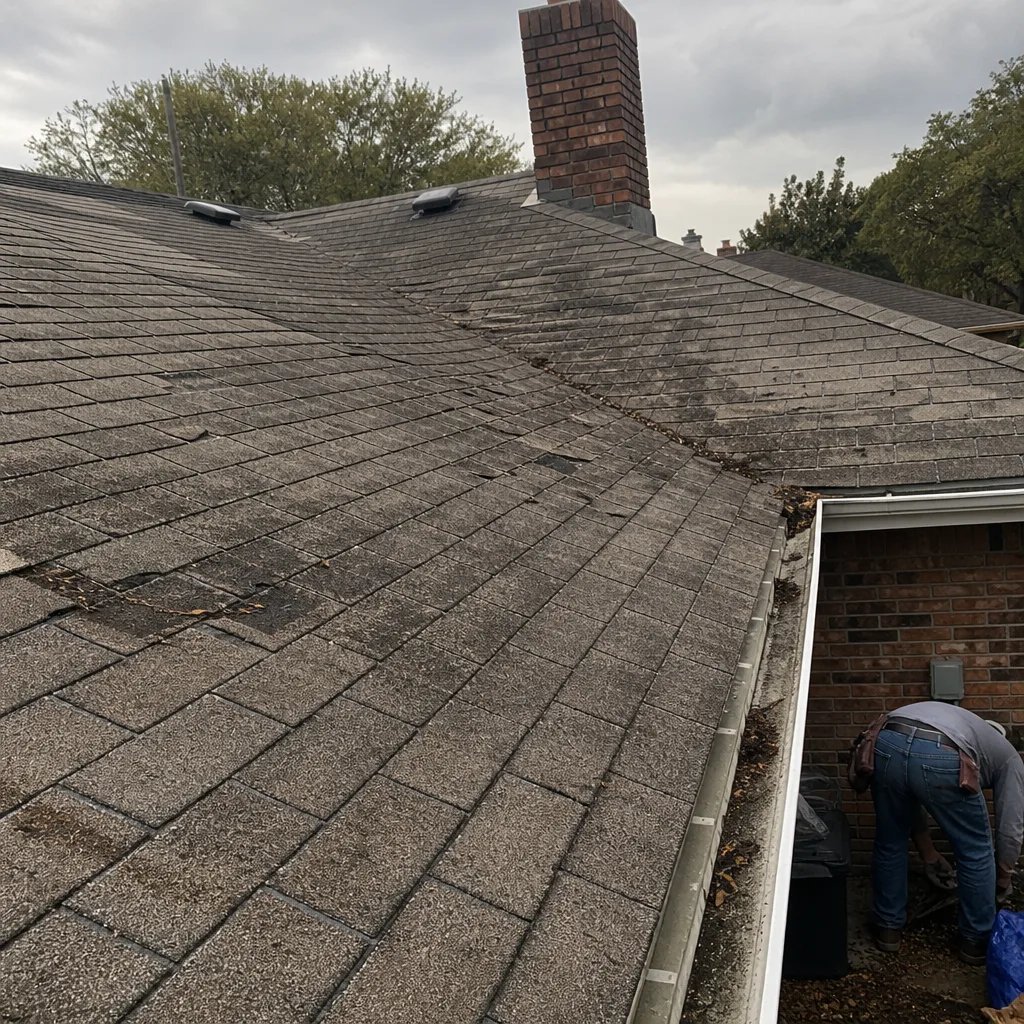 Before
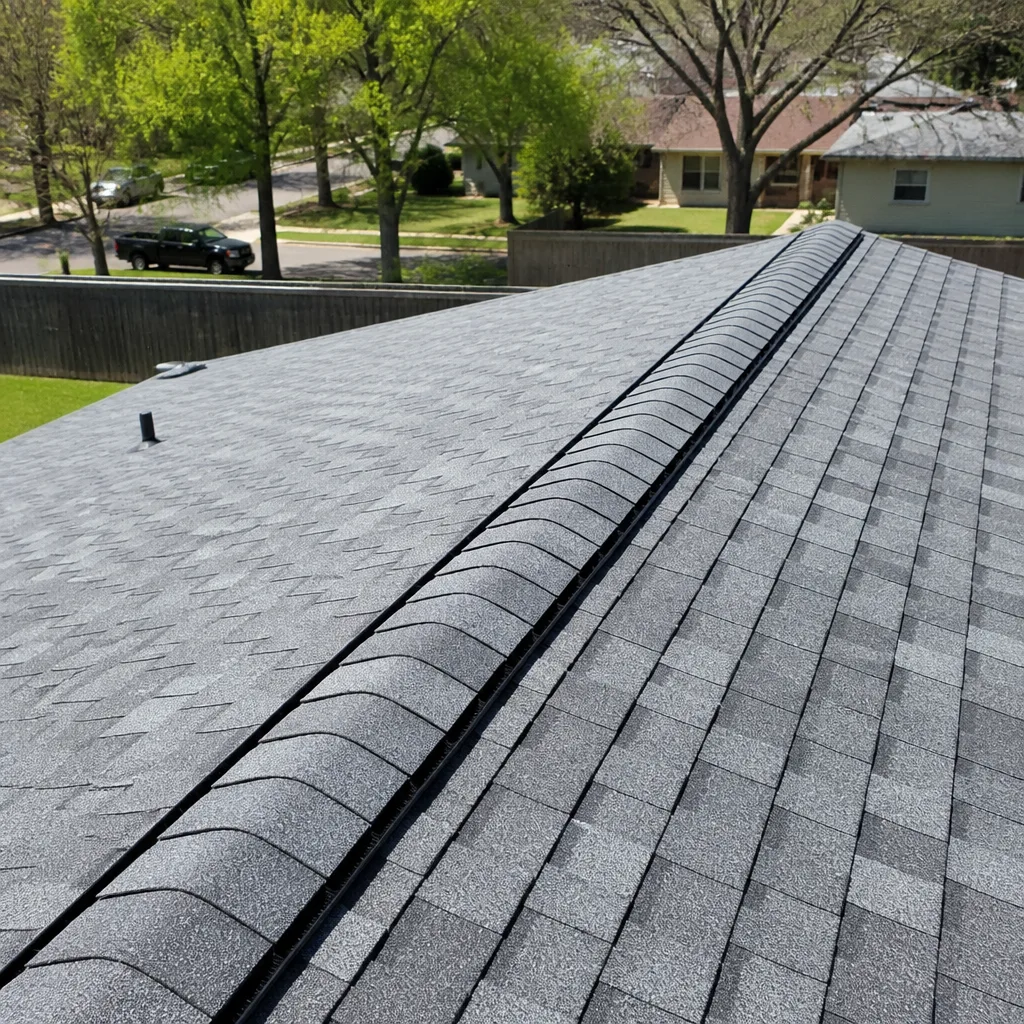 After
After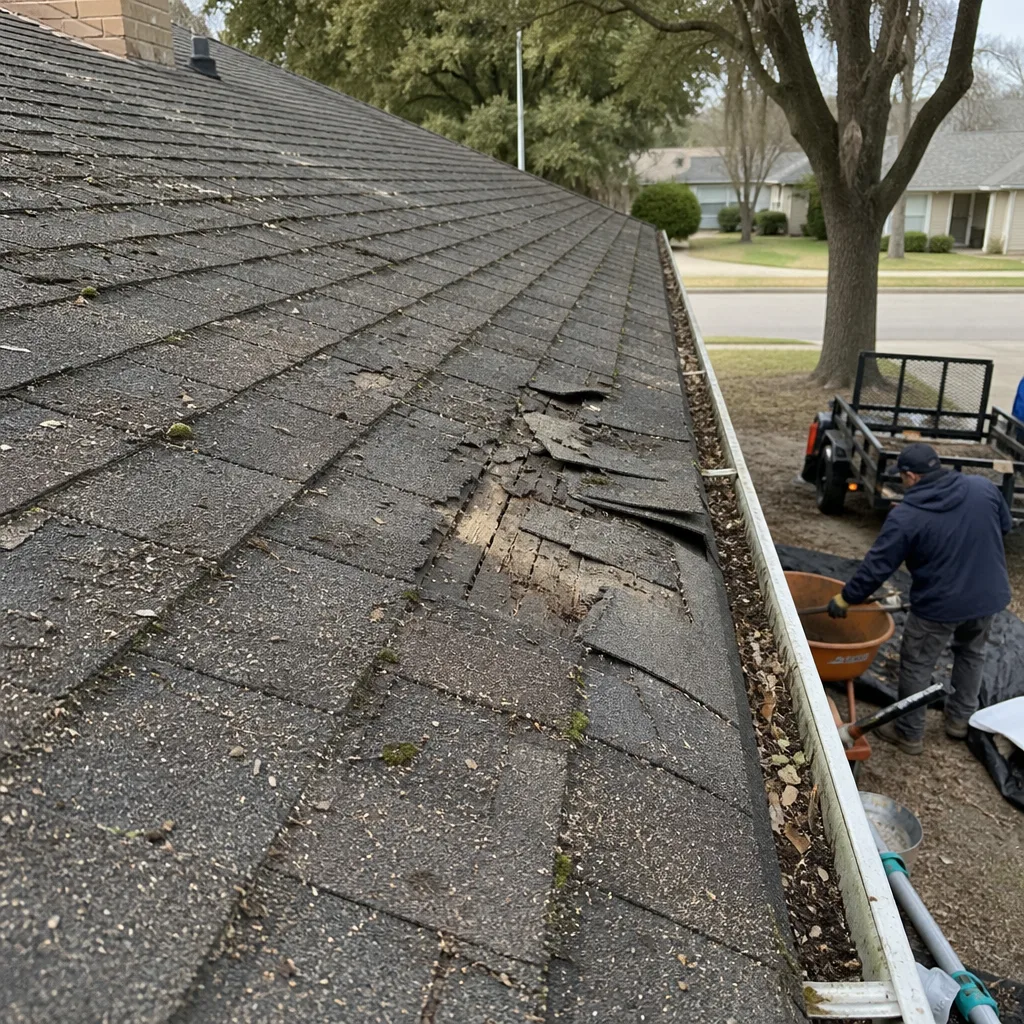 Before
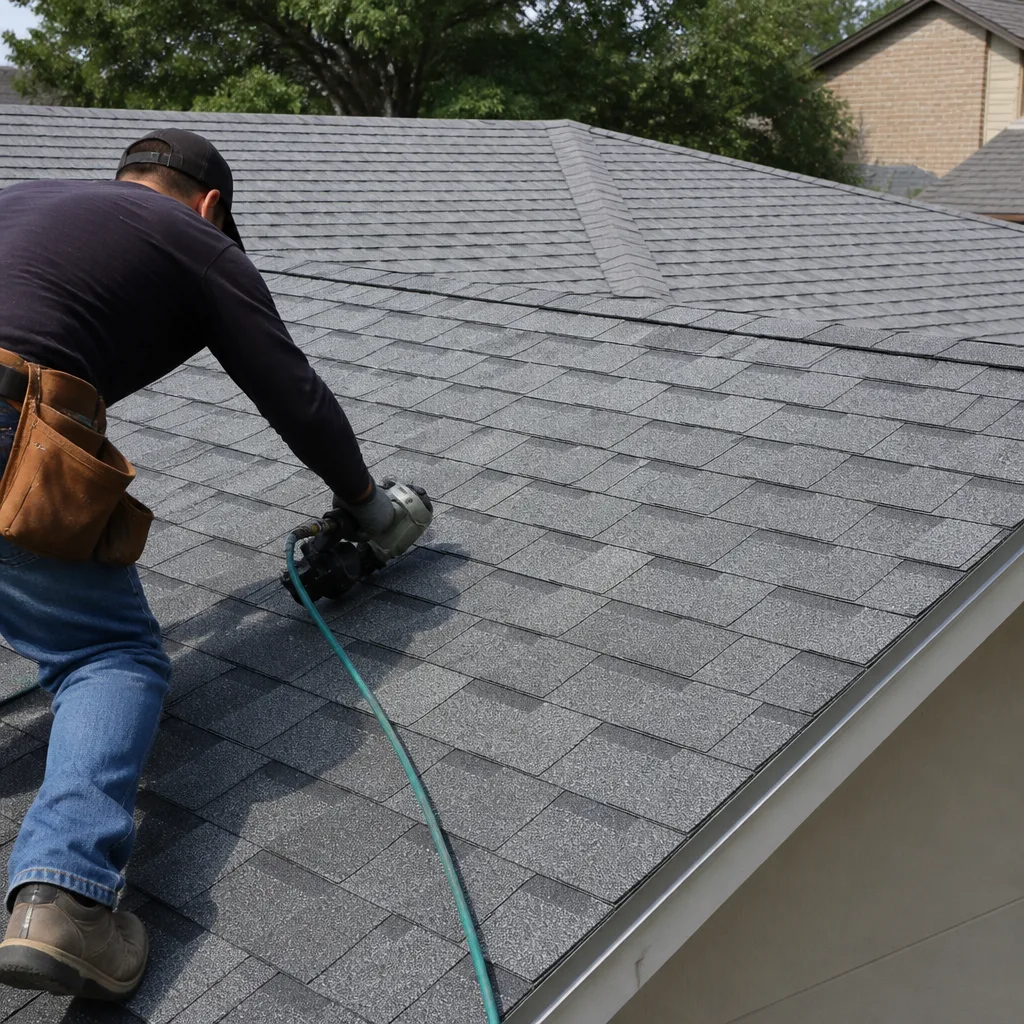 After
AfterWhen to Call a Professional
Call a professional when you see any of the “Call Today” triage signs: active water intrusion, multiple stained rafters, daylight through the roof plane, sagging roofline, or mold in the attic. Also call if you’ve found hail damage that exceeds your deductible, if flashing is pulling away from a chimney or skylight, or if a previous repair shows exposed fasteners or mismatched shingles. These are not conditions that improve with waiting.
Crestview Roofing Co Fort Worth offers free estimates in Fort Worth. Call (682) 730-3548 and a live person answers, any hour. We’ll schedule a visit, send you a live trackable arrival time, and deliver a written price with before and after photo documentation. No arguments, no surprises, no waiting around.
Frequently Asked Questions
The most common warning sign in Fort Worth is hail damage: circular granule knockout with exposed asphalt mat, concentrated on south and west facing slopes. Hail storms are frequent here, and bruises may not leak for years, which is why the damage often goes unnoticed until a secondary problem (UV degradation or wind lifting) is present. If you’ve had hail in the past three years and haven’t had a roof inspection, schedule one. Call (682) 730-3548 for a free assessment.
Without climbing, look for three ground-level indicators: granules accumulating in gutters and at downspout bases, impact marks on metal surfaces (gutters, downspouts, vents, window flashing), and shingle bruising visible from the eave line on low slopes. Any of these signals combined with a known hail event in your area warrants a professional assessment. The cost of an inspection is far less than the cost of letting hidden hail damage compound.
From inside the attic, flashing failure typically shows as water staining on rafters or decking near the chimney, skylight curb, or wall intersection, often with a rust-colored streak running down from the flashing point. You may also see daylight coming through gaps at the flashing seam. The interior stain pattern is usually isolated to one side, since flashing leaks follow a specific path rather than spreading evenly.
A correctly installed architectural asphalt shingle roof in Fort Worth typically lasts 18 to 25 years, though the high heat and hail frequency here push the lower end of that range. Three-tab shingles, which are thinner, often fail at the 12 to 15 year mark under Fort Worth conditions. Metal and tile systems can last 40 to 60 years with proper maintenance, but they require different flashing techniques and are less common in the Fort Worth market.
You can replace an individual shingle if you’re experienced with ladder safety and have the right tools, but we don’t recommend DIY roof work on any steep-slope Fort Worth home; read our DIY vs Professional Roofing: The Fort Worth Homeowner’s Decision Guide to understand why. The injury risk from working on a hot sloped surface is significant, and improper repairs create liability for future leaks. The same cost you’d spend on professional repair is often less than the cost of fixing a DIY repair that failed. Call us for a written price and let a background-checked technician handle it.
Most reputable Fort Worth roofing companies offer free inspections, including us. We’ll inspect the attic, the roof surface, all flashing points, and provide photo documentation of everything we find along with a written quote for any recommended work. Free means no obligation and no hidden charges. If you need a documented inspection for insurance purposes, we’ll provide that at no cost as part of the assessment.
The Bottom Line
Roof failure in Fort Worth follows patterns, and those patterns are readable if you know where to look. The attic tells the truth before the shingles do. Hail, wind, and UV each leave distinct signatures that point to different repairs. Flashing is the most common leak source and the most commonly missed. And a previous bad repair can be as dangerous as the original damage it attempted to fix. Read the interior first, know the difference between failure modes, check the flashing, and learn the triage framework. When you spot something that falls into the “Call Today” category, call (682) 730-3548, and explore more guides & resources to stay ahead of roof problems. The inspection is free, the price is in writing, and you’ll know exactly who’s arriving and when before they ever pull up to the house.
Written by Dylan Pace, Owner at Crestview Roofing Co Fort Worth, serving Fort Worth since 2000.