
Last updated October 17, 2026
 Metal roofing
 Architectural shingles
 Tile roofing
 GAF
GAF Owens Corning
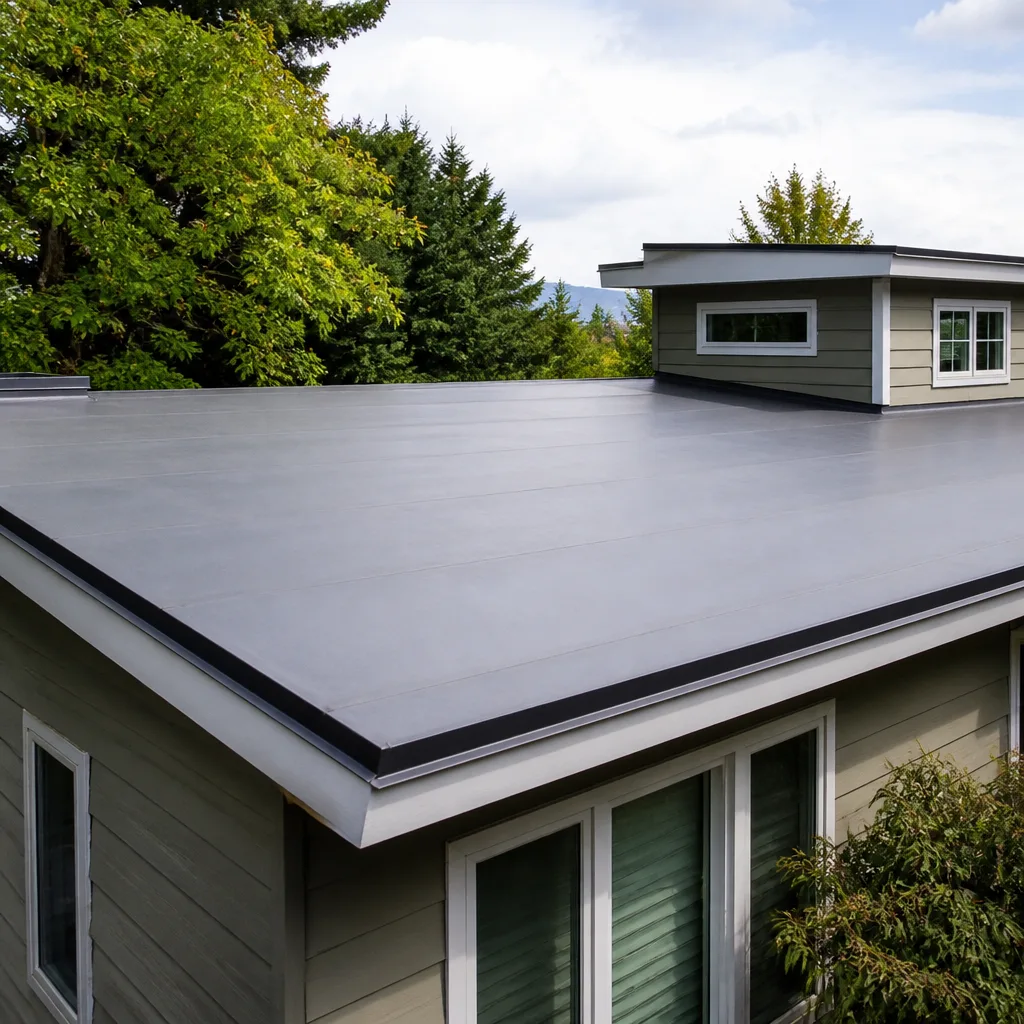 Flat & low-slope
Free roof inspection with deck photos before we talk money - GAF and Owens Corning certified installation
Seasonal Roofing Care for Fort Worth: Year-Round Homeowner’s Guide
Most seasonal roofing advice treats Fort Worth like it has four equal seasons. It doesn’t. What we have is two high-damage windows, one sleeper threat, and one maintenance window that almost everyone misses. Spring storm season can tear off shingles faster than any other time of year. Summer UV exposure quietly cooks your roof from above while attic heat bakes it from below. Winter brings ice damming on those flat-roof additions common to older Fort Worth ranch homes. And November, the single best month for roofing work in Fort Worth, gets wasted on leaf raking. This guide rebuilds the year around how roofs actually fail here, so you know exactly what to check, when to check it, and which problems are worth calling about before they become five-figure repairs. For a deeper dive, see The Complete Guide to Roofing in Fort Worth.
Quick Answer
In Fort Worth, seasonal roof care means pre-storm prep in March through May, ventilation-focused checks during the 150°F attic heat of summer, ice-dam inspection on flat-roof additions in winter, and a full maintenance window in November when storm season has ended and contractor availability is best. A seasonal inspection costs far less than repair work, and documenting your roof’s condition with timestamped photos each season strengthens any future insurance claim if a storm hits.
Styles & brands we work with
Table of Contents
- Spring Storm Season: The Pre-Storm Prep Checklist (March – May)
- Summer Attic Heat: How 150°F+ Temperatures Age Your Shingles Faster
- The Sleeper Threat: Ice Dams on Flat-Roof Additions (December – February)
- November: The Fort Worth Maintenance Window Most Homeowners Waste
- How to Document Your Roof’s Condition with Timestamped Photos
- Ventilation Ratios That Actually Matter in Fort Worth
- What Seasonal Roof Care Actually Costs in Fort Worth
- Common Mistakes to Avoid
Spring Storm Season: The Pre-Storm Prep Checklist (March – May)
Fort Worth doesn’t have a gentle spring. It has a storm season. From March through May, hail, high winds, and tornadic weather roll through Tarrant County with enough regularity that local roofers can map the storm paths by zip code. What most homeowners don’t realize is that the roof’s condition before the first storm determines whether that storm causes a few hundred dollars of damage or a full replacement.
Think of pre-storm prep as giving your roof its best chance before the weather gives it a beating. A shingle that’s already loose, a section of flashing with failing sealant, a nail that’s backed out half an inch: these small failures turn into water intrusion points when a 60 mph gust hits them at the wrong angle.
Here’s our pre-storm prep checklist, developed specifically for Fort Worth’s spring weather patterns:
- Walk the perimeter and look up. From ground level, check for shingles that look lifted, curled at the edges, or missing entirely. After a winter of freeze-thaw cycles, granule loss tends to concentrate in valleys and at roof edges. Look for dark patches where the asphalt mat is showing through.
- Check flashing at every penetration. Flashing, which is the metal stripping that seals joints around chimneys, vents, and skylights, takes the most wind abuse. If the sealant around flashing looks cracked or the metal has pulled away from the surface even a quarter inch, water will find it during a spring storm.
- Clear debris from valleys. Fort Worth’s spring winds blow oak leaves, twigs, and construction debris into roof valleys just before the heavy rain arrives. Debris in valleys acts like a dam, backing water up under shingle courses.
- Inspect the ridge cap. The ridge cap shingles, which sit along the peak of your roof, catch more wind than any other spot. If they’re missing or damaged, the gap lets rain straight into the attic.
- Confirm your gutters are still attached. High winds work gutter brackets loose over time. A gutter that’s sagging or pulling away won’t channel water away from the foundation, and in a spring downpour that means water running down exterior walls and around window frames.
Most roof repair work in Fort Worth happens in the weeks after the first big storm. But the smartest money is spent in the weeks before it. When we’re doing pre-storm inspections in neighborhoods like Wedgwood, Arlington Heights, or Ridglea Hills, we regularly find damage small enough to fix in under an hour that would have meant a whole new roof section if the storm had found it first.
Summer Attic Heat: How 150°F+ Temperatures Age Your Shingles Faster
Fort Worth summers are brutal on roofs in a way that northern climates never experience. When the outside temperature hits 100°F, your attic can reach 150°F or higher. That heat doesn’t just make your air conditioner work harder. It accelerates shingle aging from both directions.
Here’s what’s happening to your roof every summer in Fort Worth. The asphalt shingles on your roof absorb direct sunlight, pushing surface temperatures to 160 – 180°F on the hottest days. Simultaneously, your attic traps heat radiating up from the living space below and from the sun-baked roof deck above, cooking the shingles from underneath. This two-sided heat exposure does three things:
- Bakes out the volatile compounds in the asphalt that keep shingles flexible. Once those compounds are gone, shingles become brittle and prone to cracking during the next hail storm.
- Warpes the substrate. Plywood roof decking expands and contracts with temperature swings. Over multiple Fort Worth summers, that movement loosens nails and creates ridges.
- Degrades adhesive seals. The heat-sensitive adhesive strips that bond one shingle to the next can fail prematurely when attic temperatures stay elevated for weeks at a time. Shingles that lose their seal lift easily in the first strong wind.
This is why a shingle roof in Fort Worth often ages faster than the manufacturer’s warranty would suggest. The warranty assumes a certain temperature profile. Fort Worth exceeds it every June, July, and August.
The mitigation isn’t a better shingle (although choosing a heavier-duty product from CertainTeed or Owens Corning helps). It’s attic ventilation. The goal is simple: keep attic temperature as close to outside temperature as possible. That means moving enough air through the attic that heat doesn’t accumulate. For most Fort Worth homes, that requires a vent system with primary manufacturers recommending at least 1 square foot of net free ventilation area per 150 square feet of attic space, split evenly between intake (soffit vents) and exhaust (ridge vents or power vents). When the ratio is right, attic temperature drops significantly, which reduces the heat load on your shingles and eases the work your HVAC system has to do.
In our experience, most older Fort Worth homes built before 1990 have inadequate ventilation. Builders at the time might have installed a couple of static roof vents and called it done. That’s not enough for a July in Texas. If your attic feels like an oven when you open the hatch in August, your shingles are feeling it too.
The Sleeper Threat: Ice Dams on Flat-Roof Additions (December – February)
Ask a Fort Worth homeowner about winter roof threats and most will mention hail or wind from a winter storm. Very few think about ice dams. But on older Fort Worth ranch homes with flat-roof garage additions, carports, or sunroom extensions, ice damming is a real and under-diagnosed problem.
An ice dam forms when heat escaping from the living space below melts snow on the roof surface. The meltwater runs down to the roof edge, where it refreezes because the overhang is colder. The ice builds up in a ridge along the edge, trapping water behind it. That trapped water then backs up under the shingles or roofing membrane and leaks into the structure.
In Fort Worth, this happens on low-slope and flat-roof sections because most of these additions were built with minimal insulation and little to no ventilation. When we get a rare winter storm with freeze-thaw cycles, like the February cold snaps we’ve seen in recent years, the conditions are right for ice damming on these additions. The water intrusion is often discovered weeks later as a ceiling stain in the garage or a musty smell in the sunroom.
What you should check on a flat-roof addition each winter:
- Look for water stains on the interior ceiling of the addition, especially near the outer walls. Ice-dam leaks often show up away from where the ice actually formed.
- Check the roofing surface for cracking or alligatoring. Constant freeze-thaw cycles stress the membrane, and tiny cracks at the seams let water through when ice backs up.
- Look for attached gutters that have pulled loose. Ice is heavy. A gutter that’s been fine all summer may be sagging after one winter ice event.
If you do find signs of an ice-dam leak, don’t try to chip the ice away. That’s a recipe for puncturing the roofing membrane, and the repair costs more than the original leak. Instead, focus on the cause: improving insulation in the addition’s ceiling and adding ventilation if possible. For the roof surface itself, a professional inspection will tell you whether the membrane is still intact or needs spot repair.
November: The Fort Worth Maintenance Window Most Homeowners Waste
November is the single best month to do roofing work in Fort Worth. Storm season is over. Summer heat has broken. Temperatures are in the range where shingles seal properly and sealants adhere well. And most importantly, roofing contractors have scheduling flexibility that disappears the moment the first spring storm hits.
Most Fort Worth homeowners spend November weekends raking leaves and putting up holiday lights. We’d argue the better use of a Saturday is the roof inspection and small-repair window that November offers. Here’s why the timing matters:
- Contractor availability. Come March, every roofer in Tarrant County is booked for weeks. In November, you can often schedule an inspection within a few days and get repairs done the same week.
- Weather conditions. Shingle manufacturers recommend installation above 45°F for proper adhesive bonding. November in Fort Worth rarely dips below that during daytime hours, which means any repair done now will bond correctly and stay sealed through the winter.
- Pre-winter protection. Fixing loose shingles or failing flashing in November means your roof faces winter ice and wind from a position of strength, not vulnerability.
The November maintenance window checklist:
- Gutter clearing and inspection. After the fall leaf drop, Fort Worth gutters are full of oak and pecan leaves. Clear them and check that the brackets are still tight.
- Flashing inspection. Every chimney, vent pipe, and skylight should have its flashing and sealant checked before the winter freeze-thaw cycles begin.
- Shingle adhesion check. Look for shingles that have lifted at the edges. If you can see the adhesive strip, it’s no longer bonding. November is the time to reseal or replace those shingles.
- Attic ventilation check. Make sure soffit vents aren’t blocked by insulation and that ridge vents are clear. Proper ventilation matters in winter too, preventing condensation that leads to mold.
- Early-season booking. If your roof is nearing the end of its service life, November is the time to get a roof replacement estimate in Fort Worth and get on a contractor’s schedule before the spring rush pushes lead times to months.
We tell every homeowner the same thing: the roof doesn’t care that it’s convenient to think about it in March. It’s been accumulating damage all summer and fall. November is your chance to address it on your schedule, at your pace, before weather makes the decision for you.
How to Document Your Roof’s Condition with Timestamped Photos
Photo documentation is the most underrated tool in a Fort Worth homeowner’s roof care arsenal. When a storm hits and you need to file an insurance claim, the adjuster will ask one question: can you prove what the roof looked like before the damage? If you can’t, any pre-existing damage gets classified as storm damage, or worse, your valid claim gets denied because the adjuster can’t distinguish old wear from new impact.
Timestamped photos create a condition record. Here’s the system we recommend:
- Set a calendar reminder for the first week of each season: early March, early June, early September, and early November. One photo session per season is enough to establish a pattern.
- Take photos from the same angles every time. Stand in the same spot in the front yard, the same spot in the back, and shoot the same roof faces. Use your phone’s timestamp feature or a timestamp app.
- Capture the details, not just the overview. Zoom in on flashing, chimney bases, roof valleys, and the ridge line. These are where damage first appears and where adjusters look hardest.
- Photograph any visible issues you find. A lifted shingle in September is either pre-existing damage or it’s proof the storm that arrived in October caused additional damage. Your photos settle the question.
- Store the photos in a labeled folder on your phone or in cloud storage. Name the folder by year and season, like “Roof Photos – 2025 – Fall.” When you eventually file a claim, you’ll have a complete visual record.
One thing we’ve learned after 25 years in Fort Worth: insurance adjusters respect documentation. A homeowner who can show a photo of a sound roof from November is in a much stronger position in April than one who says “it was fine before the storm.” You don’t need to climb a ladder or get on the roof. Ground-level photos with a smartphone are sufficient to show general condition, missing shingles, and visible flashing issues.
Ventilation Ratios That Actually Matter in Fort Worth
We touched on ventilation in the summer heat section, but this deserves a closer look because it’s the most overlooked seasonal roof care factor in Fort Worth. The standard recommendation from shingle manufacturers is 1:150, meaning 1 square foot of net free ventilation area for every 150 square feet of attic floor space. Split evenly between intake (soffit vents near the roof edge) and exhaust (ridge vents or static vents near the peak).
But Fort Worth’s heat profile means many homes should exceed that ratio rather than just meet it. When we’re inspecting roofs in older Fort Worth neighborhoods like Ryan Place or Mistletoe Heights, we routinely find attics with a single gable vent on each end and no soffit intake. That’s a ventilation ratio of maybe 1:400 if we’re being generous. The result is an attic that hits 160°F in July and shingles that age out years before their warranty period ends.
Here’s what a proper ventilation assessment looks like:
- Measure the attic floor area. For a 1,500 square foot attic, the 1:150 ratio means 10 square feet of total ventilation area, split into 5 square feet of intake and 5 square feet of exhaust.
- Check what’s actually installed. Count the soffit vents, measure their openings, and do the same for ridge vents, static roof vents, gable vents, or turbines. Most homeowners are shocked at how little actual airflow they have.
- Identify blockages. Blown-in insulation often covers soffit vents from the inside. Unless baffles were installed, the intake side is doing nothing, even if the vents look fine from outside.
- Consider powered ventilation. In Fort Worth’s peak summer heat, a solar-powered attic fan can meaningfully reduce attic temperature. But it needs to be properly sized and not work against the existing vent system.
The payoff for proper ventilation is measurable in roof lifespan. We’ve seen well-ventilated Fort Worth roofs reach 25 years on a 30-year shingle, while poorly ventilated roofs from the same era are failing at 18 or 19. If your attic is hot enough to make you sweat in August, that’s heat stress landing directly on your shingles from below.
What Seasonal Roof Care Actually Costs in Fort Worth
Let’s talk numbers, because knowing what things cost before you call is the whole point of a guide like this. These are ranges we see across Fort Worth’s residential roofing market, based on current material and labor costs in Tarrant County:
| Service | Typical Range in Fort Worth | When to Do It |
|---|---|---|
| Roof inspection (non-repair) | $150 – $350 depending on roof complexity | November or early March |
| Missing shingle replacement (up to 5 shingles) | $225 – $450 | Any time, but before storm season |
| Flashing repair or re-seal (per penetration) | $175 – $400 | Fall maintenance window |
| Valley debris clearing | $100 – $225 | November and March |
| Gutter clearing (single-story home) | $125 – $275 | After fall leaf drop |
| Ice dam damage investigation (flat roof) | $150 – $300 | Winter, at first sign of interior staining |
| Attic ventilation assessment | $100 – $200 | Summer or as part of November inspection |
These are inspection-level and small-repair prices. A full roof installation in Fort Worth or full replacement is a different conversation, with costs driven by square footage, pitch, shingle choice from brands like IKO or Atlas, and decking condition.
One important note: any roofer who quotes an inspection price over the phone without seeing the roof is guessing. Roof complexity matters: a simple ranch in Wedgwood is different from a multi-story home in Tanglewood with multiple valleys and a steep pitch. A real quote comes after someone looks at the roof.
Here’s how Crestview Roofing Co Fort Worth handles pricing on seasonal work. Every quote is a written price delivered before any work starts. The number on the page is the number on the invoice. That might sound like basic business, but in roofing, it’s the exception rather than the rule. If you’d like to know exactly what your seasonal roof care would cost, call us at (682) 730-3548 and we’ll walk through it with you.
Common Mistakes to Avoid
- Treating spring “pre-storm prep” as optional. The fastest way to turn a $300 flashing repair into a $3,000 interior water damage claim is to let the storm find the weak spot first. In Fort Worth, the storm always finds it.
- Ignoring summer attic heat because “it’s always been that way.” If your attic is hitting 150°F, your shingles are aging at an accelerated rate, and no amount of resealing will undo that. The fix is ventilation, not another layer of everything.
- Raking leaves and calling that fall maintenance. Leaves in gutters cause overflow, but they don’t explain loose flashing or failing adhesive seals. November is too valuable a month to spend it only on yard work.
- Waiting until March to call a roofer. By March, every reputable Fort Worth contractor is booked for weeks. The homeowner who inspects in November gets their pick of scheduling. The one who waits until the first spring storm gets put on a list.
- Filing an insurance claim without before-photos. Without seasonal photo documentation, an adjuster has no way to establish pre-storm condition. Your word is not enough. Photos are.
- Skipping the flat-roof addition inspection. Garage and sunroom additions with low-slope roofs are the most common source of winter leaks in older Fort Worth homes, and most homeowners never think to look until there’s a water stain on the ceiling.
- Choosing a roofer based on the lowest phone quote. A roofer who will quote a price over the phone without seeing the roof is guessing. The number will change when they show up. Work with someone who looks before they quote.
See the difference
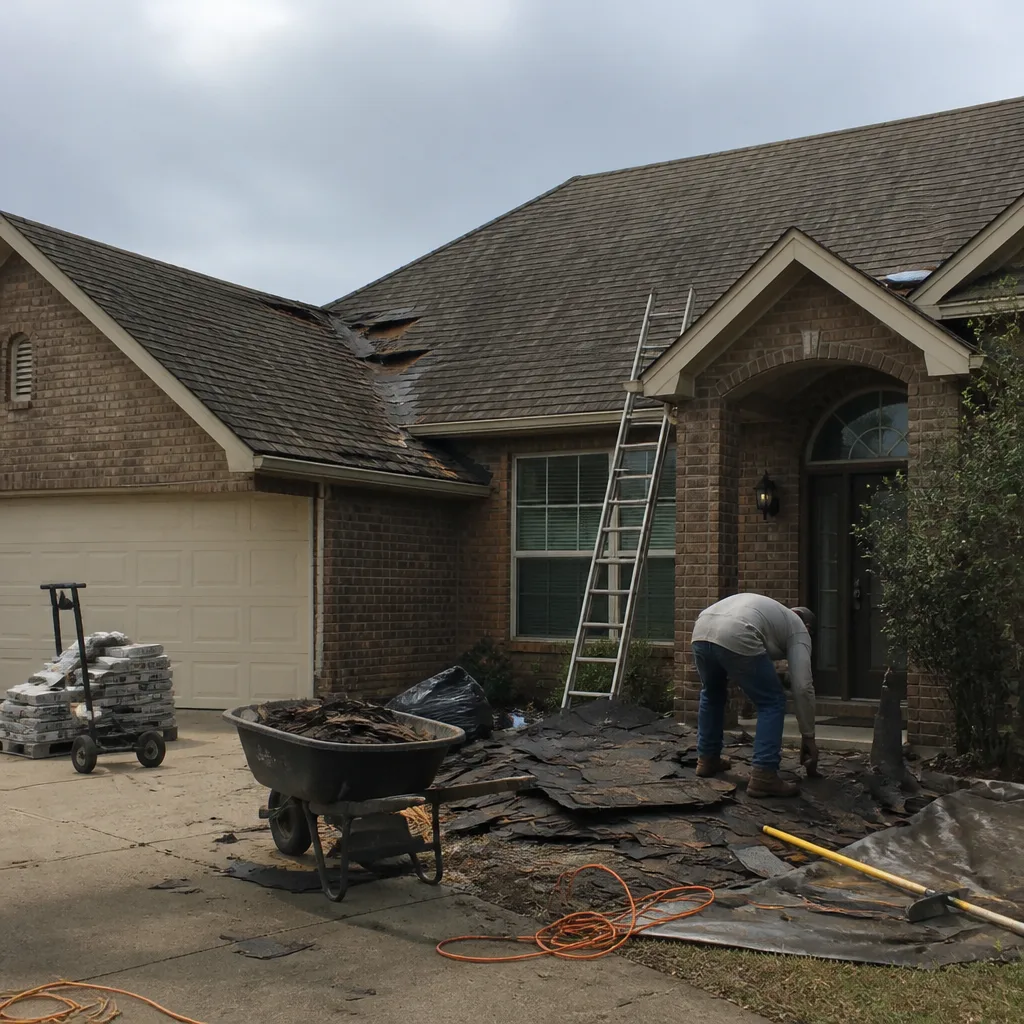 Before
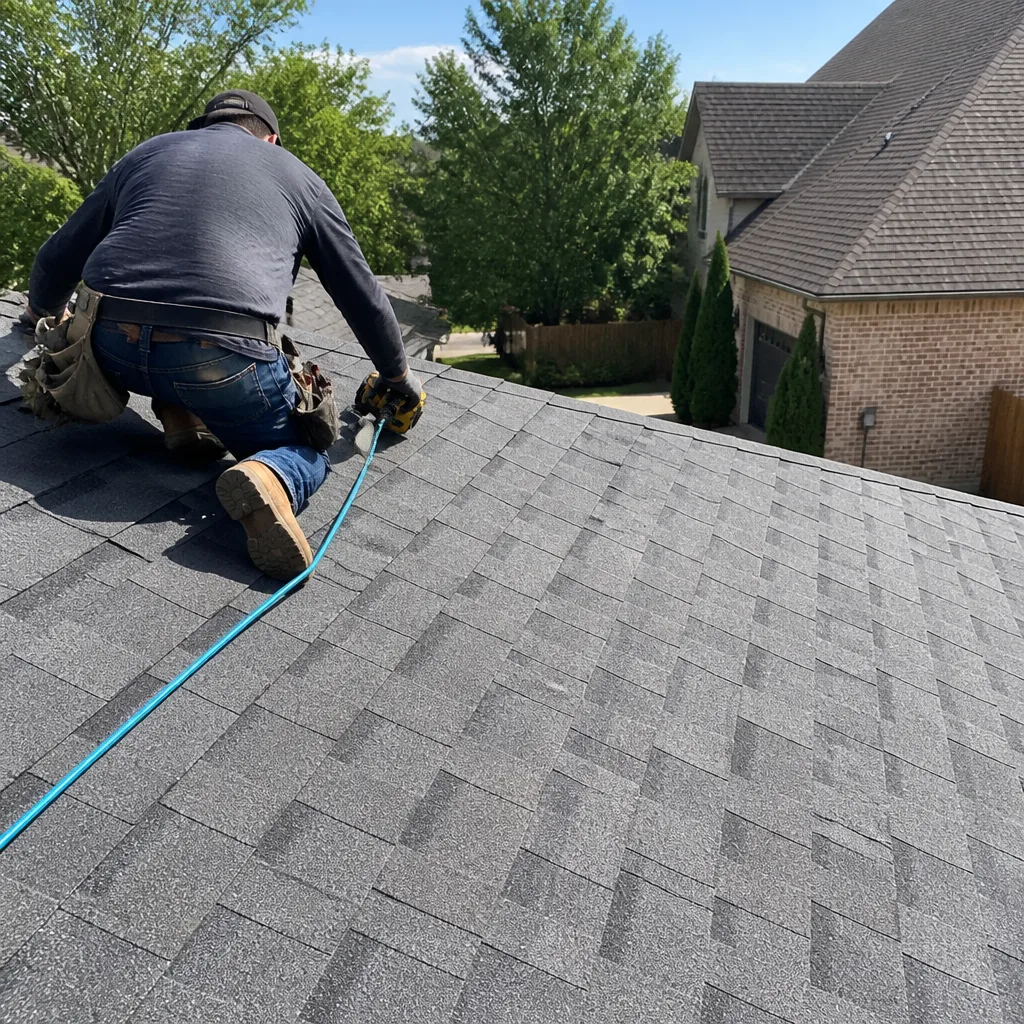 After
After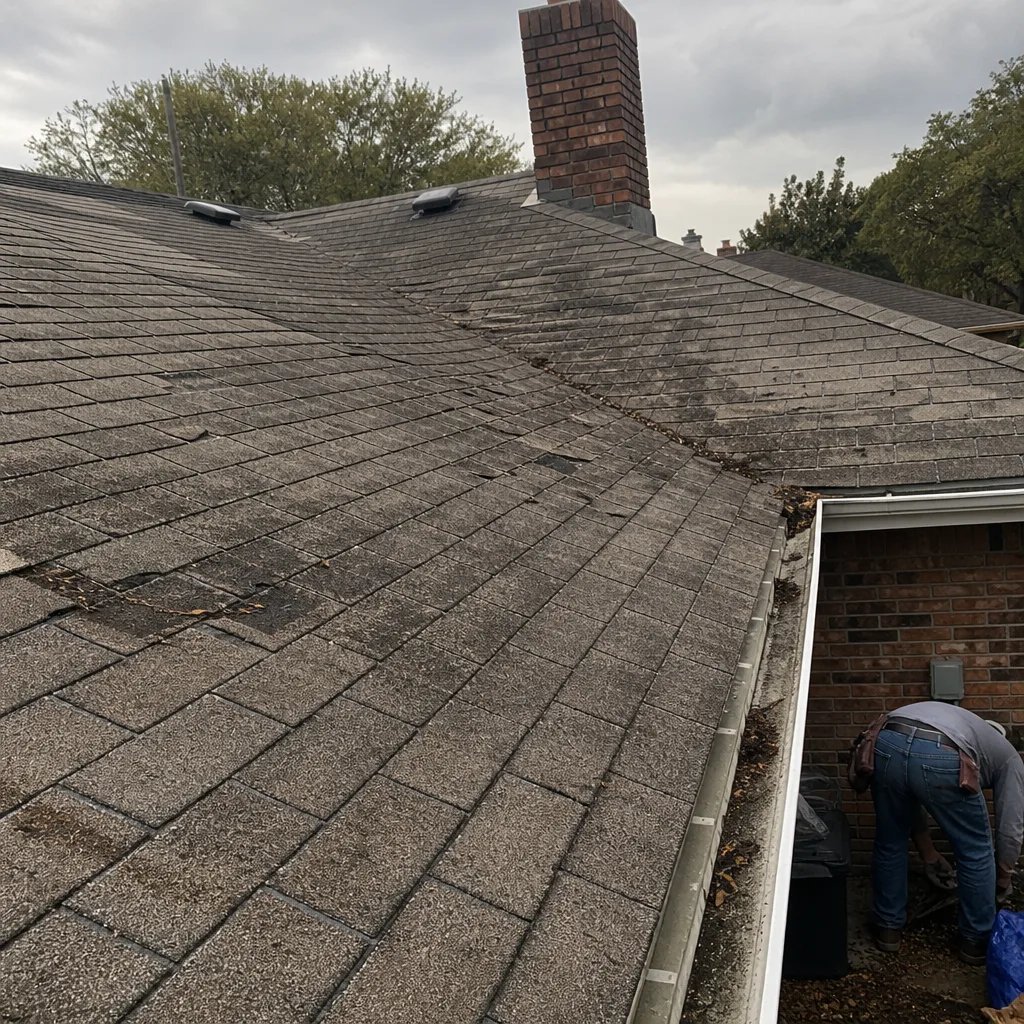 Before
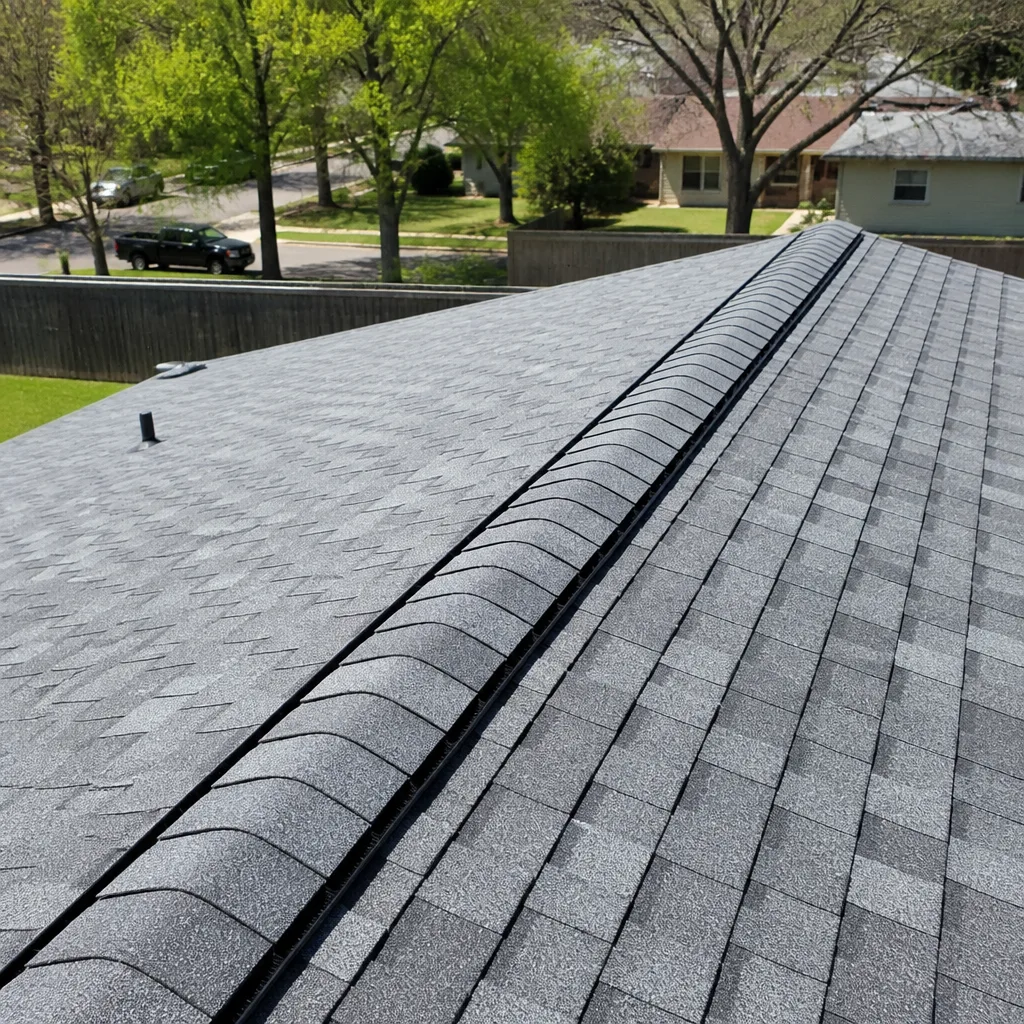 After
After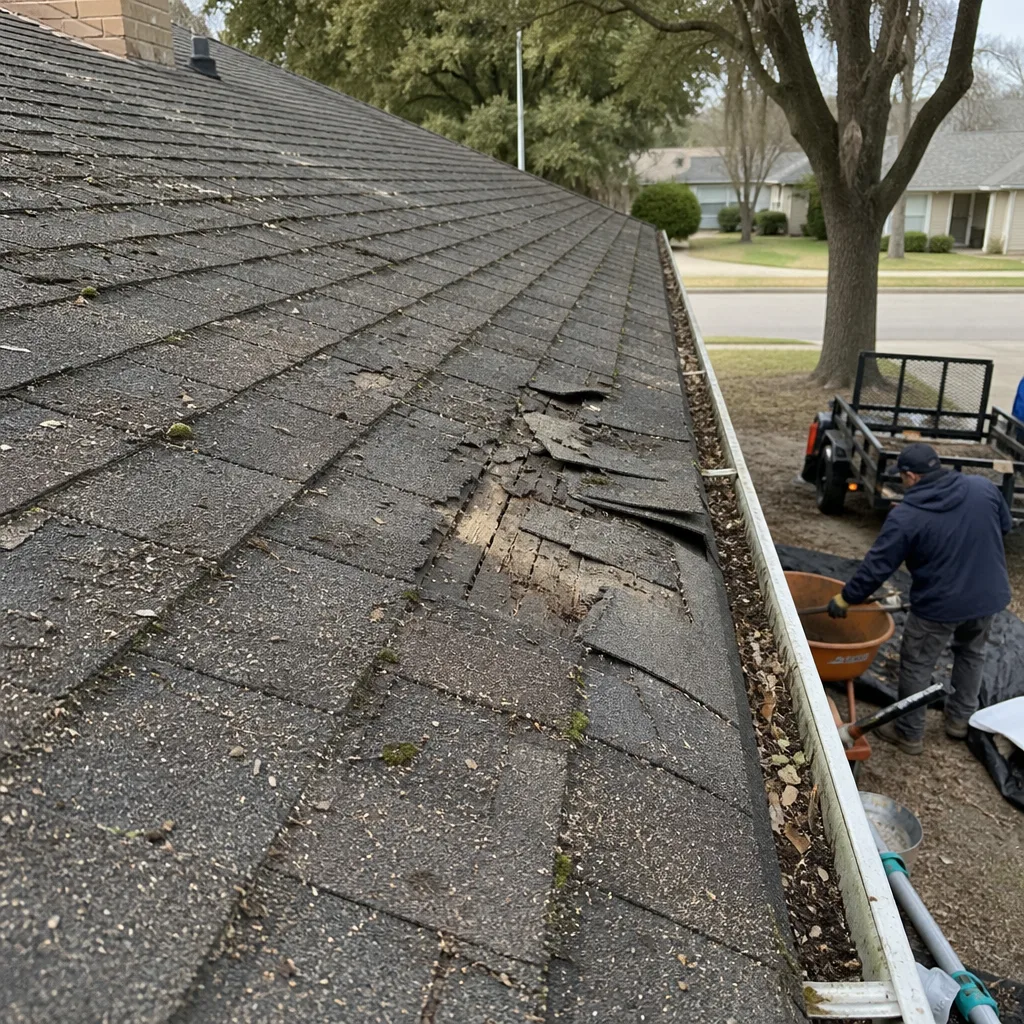 Before
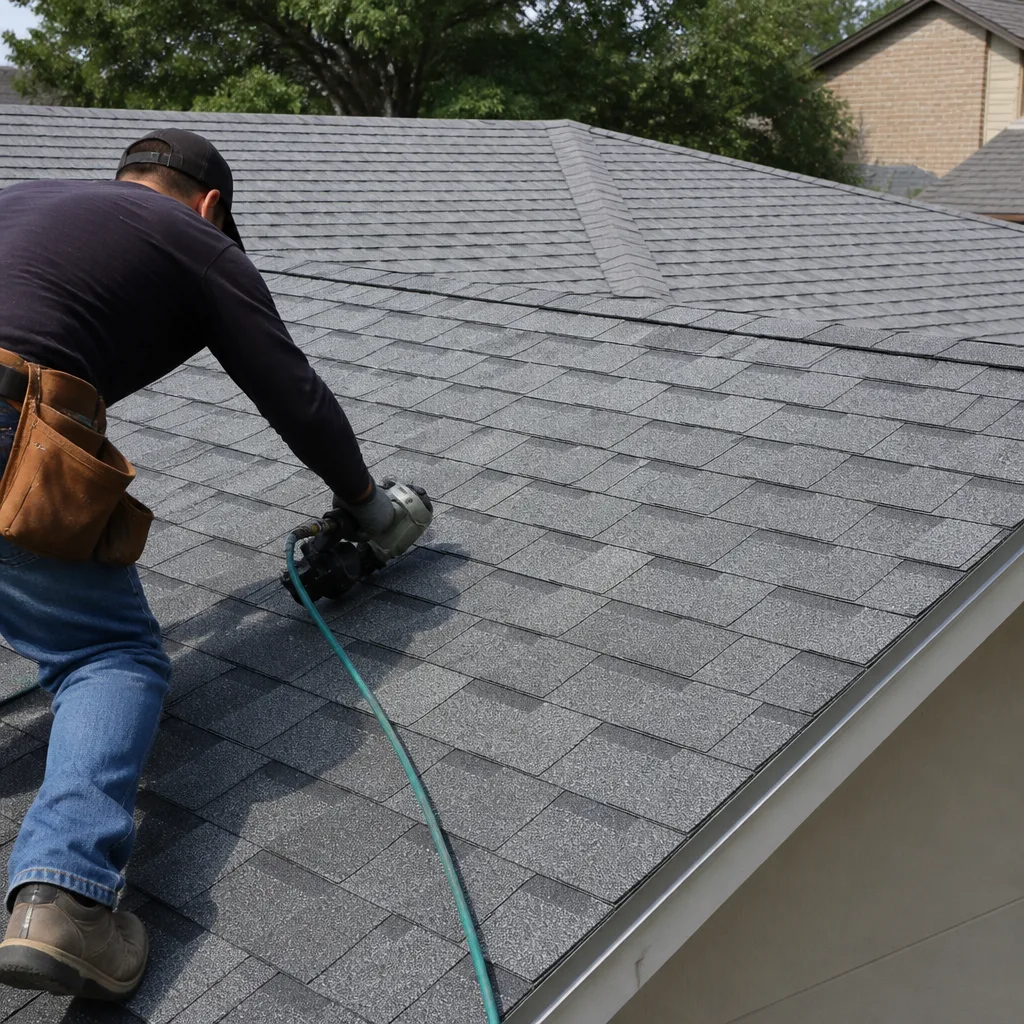 After
AfterWhen to Call a Professional
There’s a line between seasonal maintenance you can do yourself and conditions that require a trained eye, a topic we explore in DIY vs Professional Roofing: The Fort Worth Homeowner’s Decision Guide. Call a professional when you see water stains on any interior ceiling or wall, when shingles are visibly missing or sliding out of position, when flashing has separated from the surface, when you notice granule loss that’s left bald spots on the shingle surface, or when a flat-roof addition shows any cracking in the membrane. These are the early signals of failures that get expensive quickly. If you’re in Fort Worth and you’ve spotted any of these signs, Crestview Roofing Co Fort Worth offers free estimates and written pricing before any work starts. Call (682) 730-3548 to schedule an inspection.
Frequently Asked Questions
November is the best month for roof work in Fort Worth because storm season has ended, temperatures are in the ideal range for shingle sealing, and contractors still have scheduling flexibility. The second-best window is late September through October, after summer heat breaks but before the fall rush. By March, demand has spiked and lead times stretch for weeks. Call (682) 730-3548 to schedule your fall inspection before the spring rush.
On a 100°F day, a Fort Worth attic routinely reaches 150°F or higher without adequate ventilation, and shingle surface temperatures can hit 160 – 180°F. This heat accelerates shingle aging by baking out the compounds that keep them flexible, and it warps roof decking over time. Improving attic ventilation to at least a 1:150 ratio of vent area to attic area is the most effective mitigation.
Yes, ice dams form in Fort Worth on low-slope and flat-roof additions like garage conversions, carports, and sunrooms, especially on older ranch homes. When heat escapes through under-insulated ceilings, it melts snow that refreezes at the cold roof edge, trapping water that backs up under the roofing material. The result is interior water staining that may not appear until weeks after the ice has melted.
We recommend a professional roof inspection twice a year in Fort Worth: once in November during the pre-winter maintenance window and once in early March before spring storm season. This cadence catches debris accumulation, loose shingles, and failing flashing before weather conditions turn minor issues into major damage.
A non-repair roof inspection in Fort Worth typically runs $150 to $350 depending on roof size, complexity, and accessibility. Some roofing companies, including Crestview Roofing Co Fort Worth, offer free estimates when the inspection is part of a repair or replacement quote. Call (682) 730-3548 for exact pricing on your roof – estimates are free.
Insurance coverage depends on your policy terms and whether you can document pre-storm condition. Most Fort Worth homeowners policies cover hail and wind damage, but adjusters frequently deny claims when they can’t distinguish old wear from new impact. Taking timestamped photos each season, keeping records of prior inspections, and filing promptly after the storm all strengthen your claim.
Yes. When we perform a pre-storm inspection in Fort Worth, the inspection report includes timestamped photos of your roof’s condition, making it far easier to prove what was pre-existing versus storm-caused if you need to file a claim later. Every inspection also includes a written price for any recommended work before anything is started.
The Bottom Line
Fort Worth roofs don’t fail randomly. They fail according to a pattern that’s predictable once you understand the local climate: spring storms find every weak point you ignored, summer heat ages shingles from above and below, winter ice exploits the flat-roof additions nobody thinks about, and November offers the perfect window to fix everything before the cycle repeats. The homeowner who works with that pattern, who does the pre-storm prep in March, who pays attention to attic heat in August, who inspects the flat roof in January, and who books the November maintenance window, gets a roof that lasts measurably longer. For more guides & resources on protecting your home, visit our blog. Crestview Roofing Co Fort Worth has been helping Fort Worth homeowners with this cycle since 2000. The Relay Visibility Guarantee means written pricing before work starts, photo documentation before and after, and the 365-Day Done Right Promise on every repair. Call (682) 730-3548 to schedule your free estimate.
Written by Dylan Pace, Owner at Crestview Roofing Co Fort Worth, serving Fort Worth since 2000.